

13th November 2026

by Brittany Delany
EV Charging Points in Stockport: A Local Driver's Guide
If you drive an electric car in Stockport, knowing where to find a reliable charging point can make everyday journeys much easier. Whether you’re heading into the town centre, doing your weekly shopping or travelling further afield, there are now a number of public EV charging points in Stockport and the surrounding areas.
However, not all charging points work in the same way. Some are designed for longer stays, whilst others can give your battery a useful top-up in a relatively short time. At John Delany Motors, we’ve put together this practical guide to help local drivers find suitable charging locations, understand the different options and look after their electric vehicles.
Where Can You Charge an Electric Car in Stockport?
Public charging is available across Stockport, including council car parks, retail parks and selected on-street locations. The right place to charge will often depend on where you’re going, how long you’re planning to stay and how much battery charge you need.
EV Charging in Stockport Town Centre
If you’re heading into Stockport town centre, there are several charging locations worth knowing about.
According to Stockport Council’s EV charging information, public charging points are listed at:
- Churchgate car park: 7kW charging, suitable for a longer visit to the town centre.
- Newbridge Lane car park: A choice of 7kW and 50kW charging.
- Edward Street: A 7kW charging bay.
- St Petersgate: On-street 7kW charging bays.
These locations give drivers the option to charge whilst shopping, working or visiting businesses in the town centre. However, it’s worth checking the charging speed before setting off, particularly if you’re only planning a short visit.
EV Charging at Stockport Retail Parks
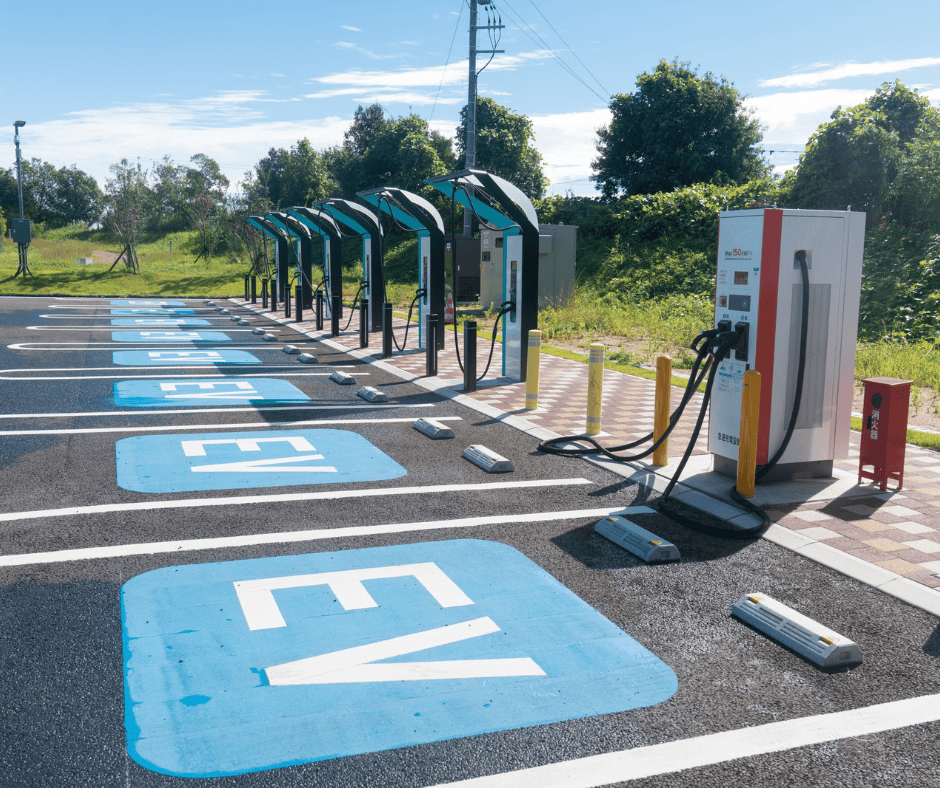
Retail parks can be particularly convenient for EV charging because you can make use of the time whilst you’re shopping.
Stockport Retail Park on Great Portwood Street has public charging operated by evyve, with chargers offering up to 75kW. There is also an Osprey charging hub at Manchester Road Retail Park, providing high-powered charging for drivers who need a quicker stop.
You can check the details through evyve’s Stockport charging locations and the Osprey Charging website.
Before visiting, check whether the chargers are available, what they cost and whether any parking restrictions apply.
EV Charging Around the Wider Stockport Area
You don’t necessarily need to travel into the town centre to find a public charger. There are charging locations across several of Stockport’s surrounding communities.
Some examples include:
- Cheadle: Massie Street car park, with standard, rapid and ultra-rapid charging options.
- Cheadle Hulme: Mellor Road and Woods Lane car parks, with rapid and ultra-rapid charging available.
- Edgeley: Caroline Street car park, offering ultra-rapid charging.
- Hazel Grove: Commercial Road West car park, with a range of charging speeds.
- Romiley: Romiley Precinct, with standard, rapid and ultra-rapid options.
- Reddish: Ashbrook Lane car park, offering standard and rapid charging.
- Gatley: Church Road car park, with standard and rapid charging.
These are examples rather than a complete list, and charging availability can change. For the latest locations and charger information, we’d recommend checking Stockport Council’s charging guide or Zapmap’s Stockport charging map.
What’s the Difference Between Standard, Rapid and Ultra-Rapid Charging?
One of the most useful things to understand when using public EV charging points is that a higher-powered charger doesn’t always mean your car will charge at that speed.
Charging points are generally grouped according to their power output:
- Standard charging (3kW to under 8kW): Often found in car parks and on-street locations. Best suited to longer stays or charging over several hours.
- Standard plus charging (8kW to under 50kW): Useful when you’re parked for a few hours, such as during shopping or leisure activities.
- Rapid charging (50kW to under 150kW): Designed for shorter stops when you need to add a useful amount of charge.
- Ultra-rapid charging (150kW and above): The quickest public charging option, although your vehicle must support the higher charging rate to benefit fully.
The actual time needed depends on your car’s battery size, its maximum charging capability, the battery’s current charge level and other conditions, including temperature.
For example, if your car can only accept 50kW of DC charging, connecting it to a 150kW charger won’t make it charge three times faster.
You can find more information about charging speeds in the Energy Saving Trust’s guide to charging electric vehicles.
How Much Does Public EV Charging Cost in Stockport?
The cost of charging an electric car at a public charging point depends on the operator, the charging speed and the tariff available.
Public chargers normally display their prices in pence per kilowatt-hour (p/kWh). Rapid and ultra-rapid charging is generally more expensive than slower charging, so it can be worth considering whether you actually need the fastest option.
Some charging networks offer discounted rates through their apps, membership schemes or off-peak tariffs. It’s also worth checking whether there are additional fees, such as overstay charges.
For council-listed Be.EV charging bays in Stockport, the council states that parking charges do not apply whilst a vehicle is connected and actively charging. However, this shouldn’t be assumed at every charging location, particularly in privately operated car parks.
Our advice is to check the charging price and any parking conditions before starting a session. A charger that’s convenient isn’t necessarily the cheapest option, especially if you’re using it regularly.
What If You Don’t Have a Driveway or Home Charger?
For drivers who don’t have access to off-street parking, public charging becomes a much more important part of owning an electric vehicle.
On-street charging points, such as those listed at St Petersgate, can be useful for drivers who live nearby or need somewhere to charge whilst visiting the area. Council car parks with standard charging can also provide an alternative when you’re planning to leave your vehicle for a few hours.
However, it’s important to check local parking restrictions, maximum stay periods and whether overnight access is permitted. Not every public charger is suitable for leaving a vehicle connected for long periods.
If you rely mainly on public charging, it’s worth identifying two or three convenient locations rather than depending on a single charging point.
If you’re still considering making the switch, our guide to Should You Go Electric in 2026? A Mechanic’s Honest Opinion covers some of the other practical things worth thinking about before buying an electric car.
Public EV Charging Etiquette: A Few Things Worth Remembering
As more drivers use public charging points, a little consideration can make the experience easier for everyone.
There are a few simple things we’d recommend keeping in mind:
- Only use a charging bay when you’re charging. These spaces are there for drivers who need access to the equipment, not general EV parking.
- Move your car when you’ve finished. Particularly at rapid chargers, another driver may be waiting.
- Don’t block access whilst waiting. If the charging bays are occupied, make sure other vehicles can still get in and out safely.
- Check the parking restrictions. Some locations have maximum stay periods or additional charges if you remain after charging.
- Look after the equipment. Return connectors properly and report damaged or faulty chargers to the operator.
- Be considerate when chargers are busy. If you’ve already added enough charge to complete your journey comfortably, you may not need to wait until the battery reaches 100%.
Rapid charging also tends to slow considerably as the battery approaches full capacity. In many cases, charging to around 80% and continuing your journey can be more practical than waiting for the final 20%.
Does How You Charge Affect Your EV Battery Health?
Modern electric vehicles have battery management systems designed to protect the battery during charging and everyday use. However, your charging habits can still have an impact on battery health over time.
For many EVs, keeping the battery somewhere around 20% to 80% during normal daily use can help reduce unnecessary battery wear. Regularly leaving certain battery types at a very high state of charge for extended periods can contribute to degradation.
That doesn’t mean you should never charge to 100%. If you’re planning a longer journey and need the additional range, charging fully may be appropriate. Some vehicles also have different recommendations depending on their battery chemistry, so always follow the manufacturer’s guidance.
It’s also worth remembering that frequent rapid charging can place greater demands on the battery than slower charging, particularly in certain conditions. Using a slower charger when it’s convenient can be a sensible approach, whilst rapid charging remains useful when you’re travelling or short on time.
Temperature can also affect charging performance. In colder weather, you may notice that your vehicle takes longer to charge, especially if the battery hasn’t reached its preferred operating temperature.
How to Find an Available EV Charger Before You Travel
Even if you know where your nearest charging points are, it’s worth checking availability before leaving home.
Websites and apps such as Zapmap allow you to search for charging locations, filter by connector type and charging speed, and view available status information where supported.
Before setting off, we’d suggest checking:
- Whether the charger is operational and available.
- Whether it has the correct connector for your vehicle.
- How quickly your car can charge at that location.
- The current price and accepted payment methods.
- Any parking restrictions or access hours.
It’s also sensible to have an alternative location in mind, particularly if you’re running low on charge or travelling somewhere unfamiliar.
Electric Vehicle Servicing in Stockport
Knowing where to charge your electric car is an important part of EV ownership, but looking after the vehicle itself is just as important.
Although electric vehicles don’t require the same engine maintenance as petrol or diesel cars, they still have brakes, tyres, suspension, cooling systems and other components that need regular attention. Battery management and thermal systems also play an important role in how an electric vehicle performs.
At John Delany Motors, we’re experienced in servicing and maintaining a wide range of vehicles, including electric and hybrid models. As a Bosch Car Service Centre in Stockport, we understand the importance of keeping up with the correct maintenance requirements for your particular vehicle.
If you’d like to know more about what’s involved, take a look at our guide to maintaining and servicing your electric vehicle.
Whether you’re new to electric motoring or have been driving an EV for several years, our team is here to help with your vehicle’s servicing and maintenance requirements. Get in touch with John Delany Motors to find out more.